Cestian · Guides
Coffee Machines for Small Kitchens: Choosing for Space and Everyday Use
A coffee machine for a small kitchen needs to do more than fit on a narrow section of worktop. You also need space to refill the water, add coffee and clean the components. The best choice therefore starts not with the smallest dimensions, but with the tasks you perform every day.
Also consider how much coffee you make and what you enjoy drinking. One cup each morning calls for different priorities than several coffee drinkers or regular visitors. A compact appliance can be convenient to use, provided that a small reservoir or limited capacity does not constantly create extra work.
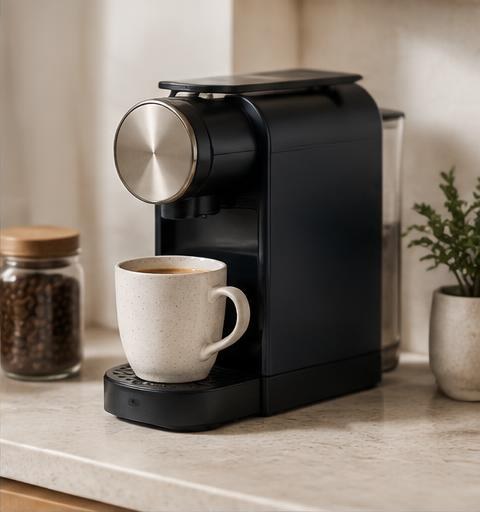
What Should You Look for in a Coffee Machine for a Small Kitchen?
Measure the full space required for use. Note the width, depth and height of the available location, including the distance to wall cabinets and the power socket. Then check which parts move upwards, forwards or sideways: a lid, capsule lever, drip tray or water tank may require more space than the external dimensions suggest. Also allow for the power cord and any protruding portafilter. Observe the specified clearance for ventilation and steam; do not wedge an appliance tightly beneath a cabinet.
Match capacity and operation to your routine. Check how much water the reservoir holds and whether you can remove it without moving the machine. On some machines, rinsing programmes also consume water, so the full reservoir capacity is not available for making coffee. Check that your usual cup or mug fits beneath the spout. If you want to froth milk, reserve space for a jug, steam wand or separate frother, as well as for cleaning these immediately after use.
Assess maintenance and connection requirements before making your choice. A removable drip tray, an easily accessible brew group and a straightforward set of removable components make a cramped workspace more manageable. Find out which parts need to be cleaned by hand and where you will leave them to dry. Always follow the manufacturer's instructions for connection, cleaning and descaling, including the recommended product and frequency for your water hardness. Compare recurring costs for coffee, filters and maintenance as well, rather than just the purchase price.
Four Types of Coffee Machine and Their Space Requirements
1.Capsule Machine
A capsule machine suits those who want to make a single cup quickly with little preparation. Besides the width, pay particular attention to the direction in which the lever opens and how easily you can access the used-capsule container. Check which capsule system the appliance uses: the range of options and waste disposal arrangements differ between systems. Your supply of capsules also requires cupboard space.
- Pros:
- pre-measured portions reduce loose coffee on the worktop and make preparation straightforward.
- Cons:
- you are restricted to compatible capsules and face ongoing packaging waste and per-cup costs.
2.Compact Filter Coffee Machine
A small filter coffee machine is suitable if you mainly drink black coffee and regularly serve several cups in succession. Compare the minimum and maximum brewing capacities with your actual consumption. A model with a jug needs room for you to remove it; sufficient space must remain above the filter to add coffee.
- Pros:
- you can brew several cups in one batch and choose your own ground coffee.
- Cons:
- not every model is practical for a single small cup, and it cannot make espresso or milk foam.
3.Compact Manual Espresso Machine
A manual espresso machine offers control over dosing and preparation, but the workspace required is larger than the machine alone. Allow space for filling, tamping and emptying the portafilter. If you want to use fresh beans, you will usually need a separate grinder. Also check the room for movement around any steam wand.
- Pros:
- you can adjust preparation to suit your taste and, with suitable models, froth milk yourself.
- Cons:
- accessories, practice and cleaning require more space and attention than the compact housing might suggest.
4.Compact Fully Automatic Coffee Machine
A compact fully automatic coffee machine combines grinding and brewing, eliminating the need for a separate coffee grinder. However, check its depth and access to the bean hopper, water tank and coffee grounds container. A narrow model can be relatively deep. Choose milk functions only if you will use them, as tubes and reservoirs add to the daily cleaning required.
- Pros:
- you can prepare coffee from beans with few separate tools on the worktop.
- Cons:
- maintenance access and collection containers require clear space, while smaller reservoirs need more frequent refilling.
Choose a machine that fits not only when standing idle, but also during use and maintenance. If necessary, mark out its footprint on the worktop and walk through the steps involved. This allows you to weigh coffee flavour, capacity and convenience against the space actually available.
Frequently Asked Questions
Can a coffee machine be placed beneath a wall cabinet?
Only if the specified clearance is maintained. Consider rising steam, lids opening and access for filling and cleaning.
Does a narrower appliance always save space?
No. Additional depth, protruding components or maintenance access from the side can cancel out the advantage. Therefore, compare the full space required for use.
How often should you descale?
That depends on water hardness, usage and the appliance. Follow the manual and any alerts; a water filter does not necessarily eliminate the need for descaling.
Some links on this page are partner links. If you buy through such a link, Cestian receives a small reward from the seller. The price you pay does not change.